I/O (Input/Output) modules, also called input/output boards or remote, digital and analog nodes, with box or open frame.
MPNC modular system, MPNE modular or MPNT series (load cells, encoders and PTO).

I/O (Input/Output) modules, also called input/output boards or remote, digital and analog nodes, with box or open frame.
MPNC modular system, MPNE modular or MPNT series (load cells, encoders and PTO).
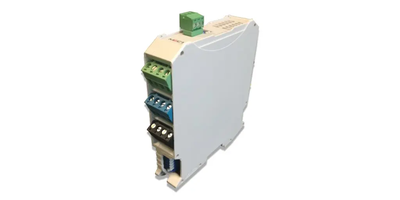
Modbus RTU interface module with analog inputs and programmable digital lines.
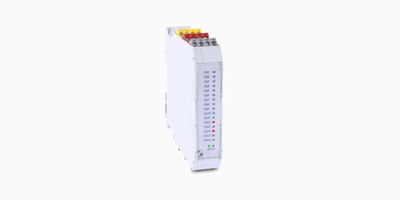
Expansion module with digital inputs/outputs. Module with 16 inputs or 16 outputs.
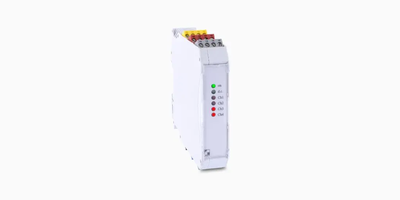
Expansion module with 4 analog inputs configurable via software (mA, V, PT100, J, K, T).
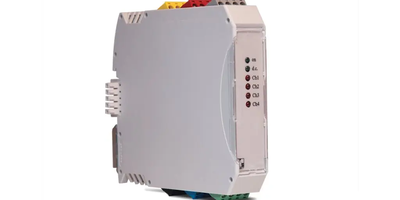
Expansion module with 4 analog ouputs configurable via software (mA, V, PWM).
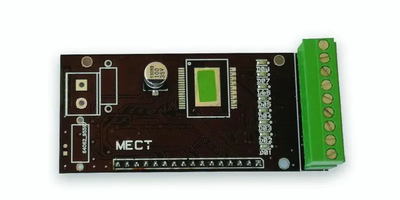
8 digital inputs MPNE1001 expansion.
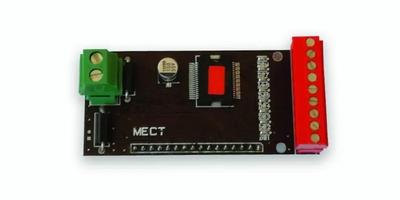
8 digital outputs MPNE1001 expansion.
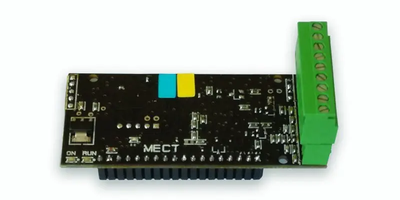
2 analog inputs and 1 analog output MPNE1001 expansion.
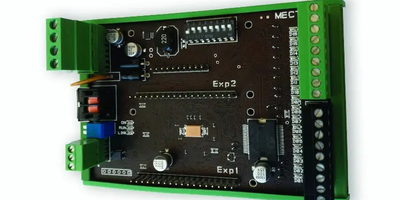
Modbus RTU interface module with programmable digital lines for DIN rail.
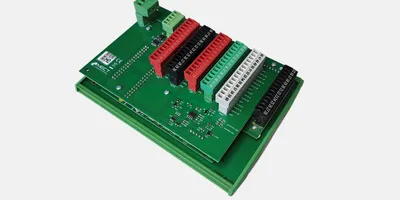
Modbus RTU RS485 I/O module with 16 digital inputs, 16 digital outputs, 4 bidirectional encoders and 4 PTOs up to 65kHz for industrial automation.
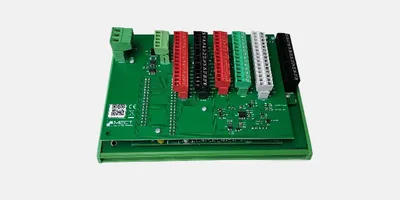
Modbus RTU RS485 I/O module with 16 digital inputs, 16 digital outputs and 3 load cell inputs for industrial automation and weighing systems.
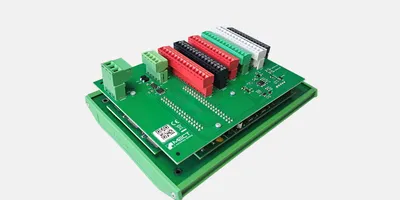
Modbus RTU RS485 I/O module with 4 encoders, 4 PTOs up to 65kHz, 3 load cells and 16 digital inputs and 16 outputs for advanced industrial automation.
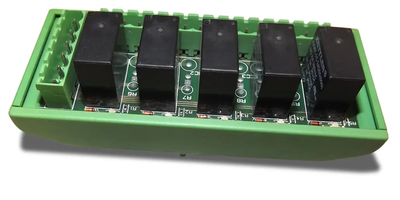
Board with 5 24 Vdc relays with 250Vac (max. 5A) or 30Vdc (max 3A) contacts.
Input/Output (I/O) modules, also called input/output boards or remote nodes, are electronic devices that serve as an interface between the control system (such as a PLC) and the field, that is, the sensors and actuators installed on a machine or plant.
Basically, they translate electrical signals from the physical world (buttons, sensors, motors, valves, etc.) into digital or analog data that the controller can process, and vice versa.
A remote node is a decentralized electronic device that:
In essence, it is an "intelligent peripheral point" of the automation network and is used to distribute acquisition or control operations, avoiding carrying all physical (analog/digital) signals all the way to the main switchboard.
Depending on the type, it may:
✅ Reduces signal wiring to the switchboard.
✅ Decreases interference and electrical noise.
✅ Facilitates modular maintenance (you can replace only one node).
✅ Increases system scalability (add nodes where they are needed).
🔹 Inputs (Input)
They receive signals from the field.
🔹 O utputs (Output)
They send signals to actuators or field devices.