Communication protocols compared: Modbus RTU vs CANopen in automation networks
by MectIn the field of industrial automation, choosing the right communication protocol is critical to ensure the efficiency and reliability of the sensor and actuator network. Two of the most commonly used protocols are Modbus RTU and CANopen. In this article, we will review the characteristics of each protocol and discuss when to prefer one or the other based on the distance, speed required, and complexity of the network.
Modbus RTU
Modbus RTU (Remote Terminal Unit) is a serial communication protocol developed by Modicon (now Schneider Electric) in the 1970s. It was designed for use in industrial automation applications and has gained great popularity because of its simplicity and flexibility. Modbus RTU uses a bus network topology, where all devices are connected to a single communication cable.
- Features:
- Communication speed: up to 115,200 baud
- Maximum distance: up to 1,200 meters
- Number of devices: up to 247 devices
- Communication type: serial, half duplex
- Advantages:
- Simple to implement and configure
- Low implementation costs
- Wide range of compatible devices
- Disadvantages:
- Limited communication speed
- Limited maximum distance
- Not suitable for applications requiring high speed and low latency
CANopen
CANopen (Controller Area Network open) is a communication protocol developed by CiA (CAN in Automation) in the 1990s. It was designed for use in industrial automation applications and has gained great popularity due to its high speed and reliability. CANopen uses a bus network topology, where all devices are connected to a single communication cable.
- Features:
- Communication speed: up to 1 Mbit/s
- Maximum distance: up to 10 km
- Number of devices: up to 127 devices
- Communication type: serial, full duplex
- Advantages:
- High-speed communication
- High reliability and safety
- Suitable for applications requiring high speed and low latency
- Disadvantages:
- More complex to implement and configure than Modbus RTU
- Higher implementation costs than Modbus RTU
When to prefer Modbus RTU?
Modbus RTU is an excellent choice when:
- The distance between devices is limited (up to 1,200 meters)
- The required communication speed is moderate (up to 115,200 baud)
- The network of sensors and actuators is relatively simple
- Implementation costs must be minimal
When to prefer CANopen?
CANopen is an excellent choice when:
- The distance between the devices is long (up to 10 km)
- The required communication speed is high (up to 1 Mbit/s)
- The network of sensors and actuators is complex and requires high reliability and safety
- Applications require high speed and low latency
Conclusion
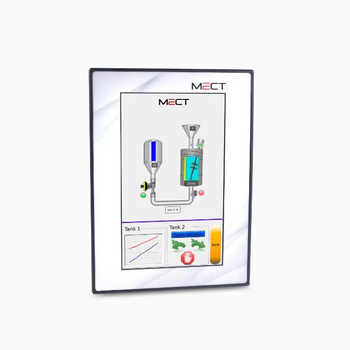
In conclusion, the choice between Modbus RTU and CANopen depends on the specific needs of the sensor and actuator network. Modbus RTU is an excellent choice for simple, low-speed applications, while CANopen is an excellent choice for complex, high-speed applications. It is important to consider the distance, speed required, and complexity of the network when choosing the right communication protocol. Mect's range of products, such as the TP1070, support both communication protocols, offering great flexibility and choice for the specific needs of your application.
Contact us
For more information, contact us at our website or phone number. We are available to help you achieve your goals.