Guide to PLCs: operation, applications and advantages
by MectPLCs (Programmable Logic Controllers) represent a milestone in industrial automation, revolutionizing the way we manage and control industrial processes. In this article, we will explore how PLCs work, their applications in different sectors and the advantages they offer, with a special focus on the advanced solutions proposed by Mect, a leading manufacturer of industrial automation devices completely Made in Italy.
What is a PLC?
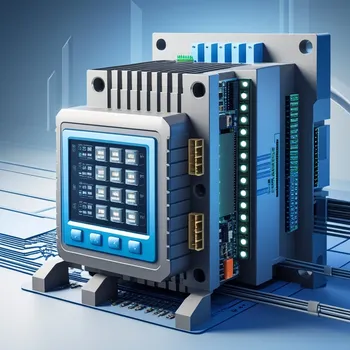
A PLC is a digital device that uses a program stored in its memory to manage and control industrial equipment and processes. Unlike traditional wired control boards, PLCs offer greater flexibility and customization, allowing them to adapt to different applications and be easily reprogrammed as needed.
How does a PLC work?
The operation of a PLC is based on a basic cycle consisting of three main phases:
- Reading Inputs (Input): The PLC acquires signals from sensors, buttons, switches and other input devices.
- Program execution: The PLC executes the stored program instructions, processing the collected data and applying control logic.
- Writing outputs (Outputs): The PLC sends control signals to actuators, such as motors, valves and other output devices, to perform required actions.
Applications of PLCs
PLCs find application in numerous industries, including:
- Line automation: Control and management of production lines, including material handling systems and robotics.
- Process control: Adjustment of parameters such as temperature, pressure and flow in chemical, petrochemical and food & beverage processes.
- Energy management: Monitoring and control of energy consumption in industrial plants.
- Transportation and logistics: Control of internal transportation systems and management of automated warehouses.
Advantages of using PLCs
The use of PLCs offers many advantages:
- Flexibility: PLCs can be easily reprogrammed to adapt to new requirements or changes in the process.
- Scalability: PLCs can be configured to handle systems of varying complexity, from simple local control to coordinating distributed processes.
- Reliability: PLCs are designed to operate in harsh industrial environments and ensure consistent and reliable operation.
- Cost reduction: Automation with PLC reduces operating costs and improves overall process efficiency.
Mect's solutions for industrial automation
Mect, a leader in industrial automation, offers a full range of PLC and human machine interface (HMI) solutions designed to meet a wide variety of needs. Among the main solutions are:
- PLC with digital and analog inputs/outputs: Ideal for applications requiring advanced digital and analog signal management.
- HMI operator panels with integrated Soft PLC: Compact and intuitive solutions for process management and monitoring.
- HMI operator panels with integrated PLC and I/O: Perfect for applications that need a compact, high-performance solution.
- Industrial Linux Panel PCs: Complete and customizable solutions for control and supervisory environments.
- Mect Suite and sMily: Development environments and remote connection software for optimal machine and process management.
Conclusion
PLCs are a key element in industrial automation, offering flexibility, reliability and scalability. With the advanced solutions offered by Mect, companies can optimize their processes, improve efficiency and reduce costs. If you are looking for a customized solution for your automation needs, Mect is the ideal partner to help you achieve your goals.